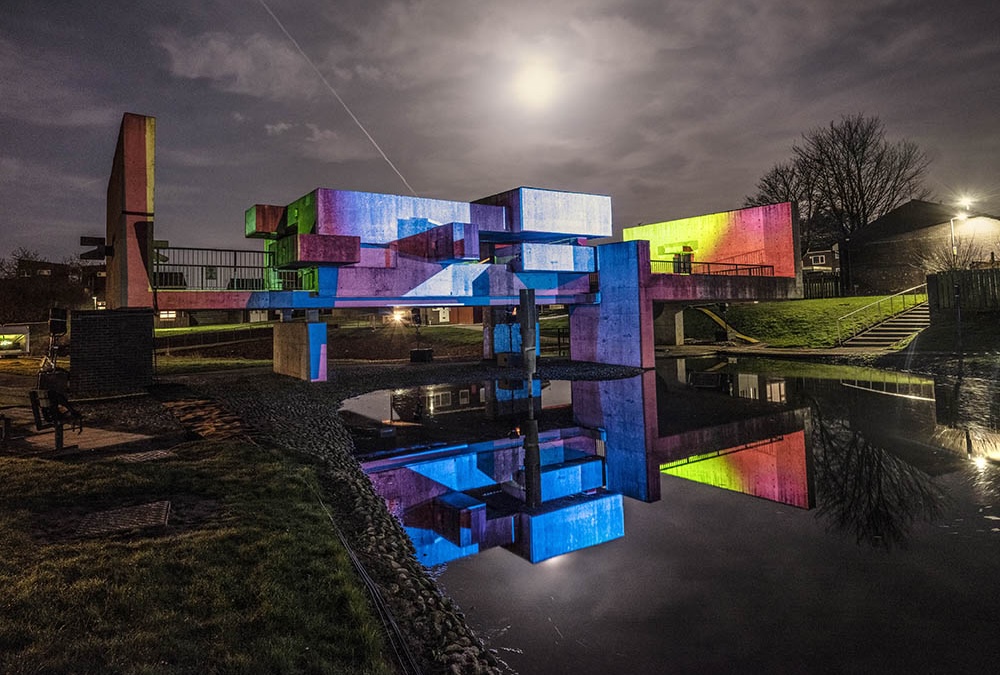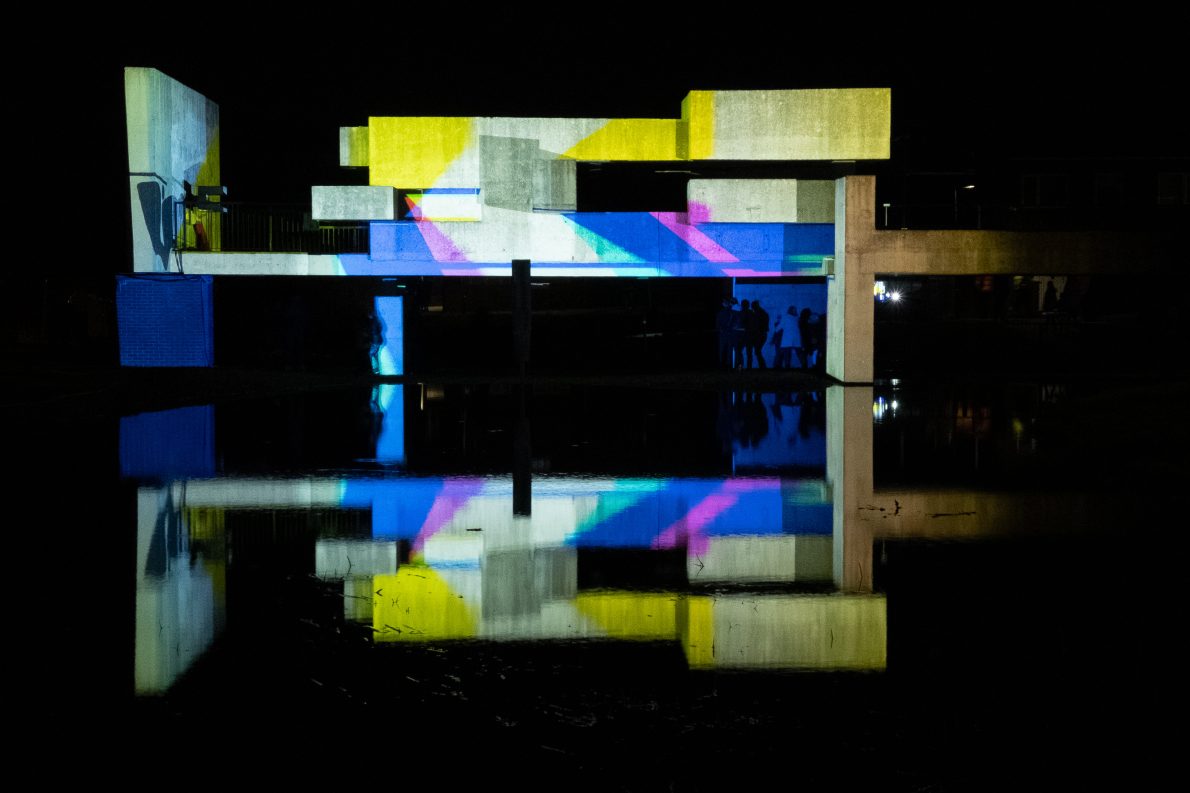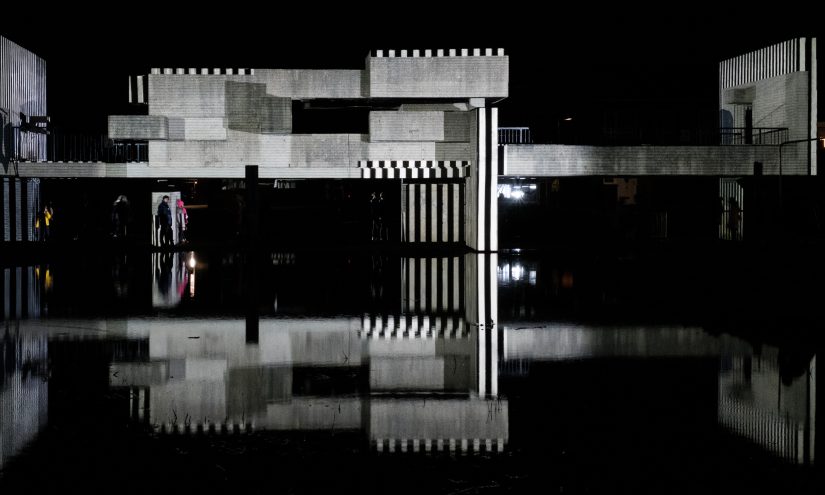

Thousands joined us on the Sunny Blunts Estate in Peterlee to see the Apollo Pavilion in a breathtaking, new light. On 22 and 23 March 2019 as part of Durham’s Year of Culture their new work, Apollo 50, transformed Victor Pasmore’s architecture.
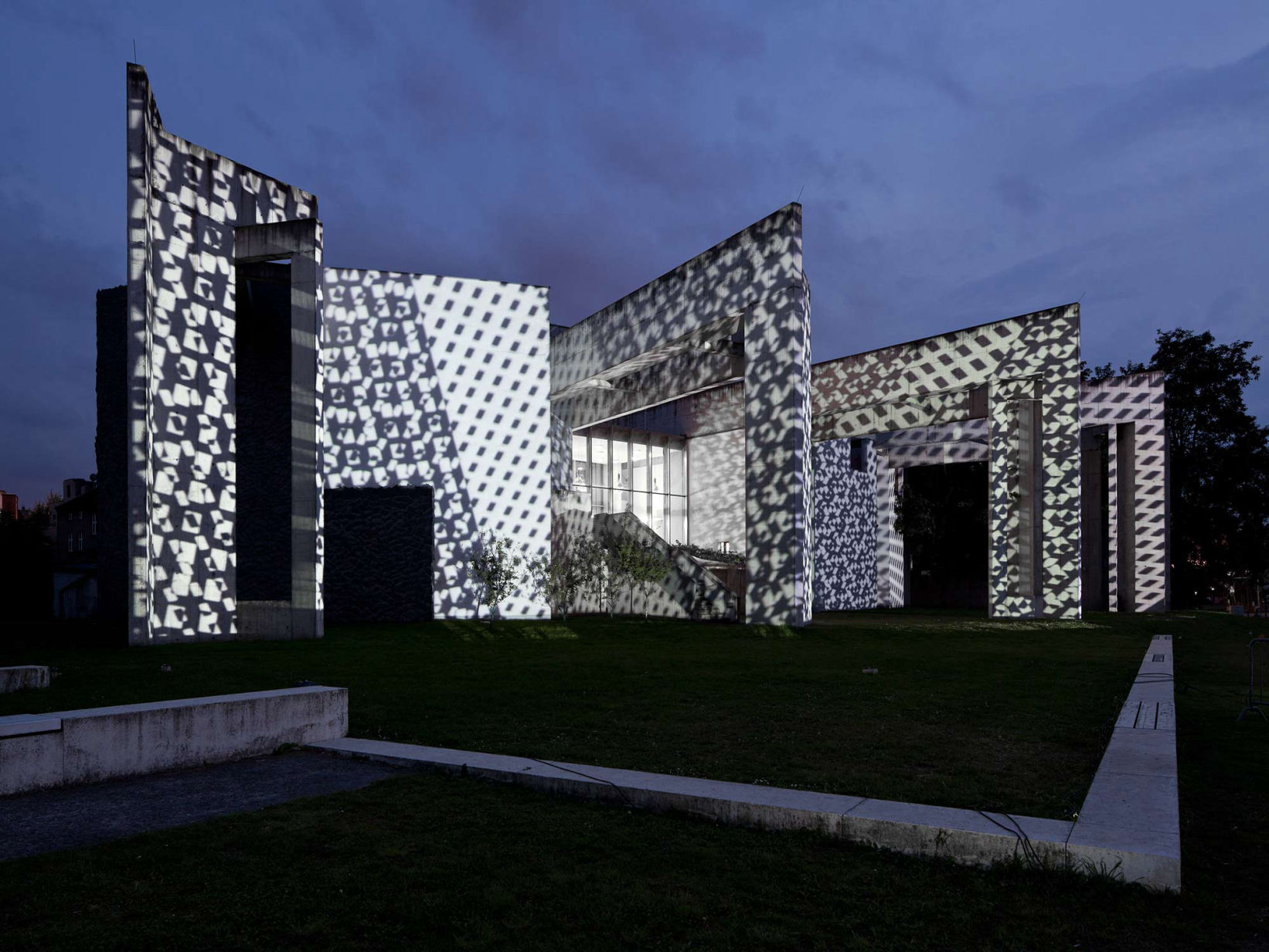
Apollo 50 was a mesmerising light installation, created to celebrate 50 years of Victor Pasmore’s Apollo Pavilion in Peterlee. Over two evenings, more than 1,500 people from across County Durham and further afield joined us at the Sunny Blunts Estate to see the infamous brutalist structure transformed. Commissioned by Durham County Council as part of Durham’s Year of Culture, Apollo 50 bathed the Pavilion in a brand new video-mapped projection. During the artwork, which ran on an 8-minute loop, the audience saw the sculpture re-shaped through three different phases.
The building was at first, covered in monochrome, geometric patterns with splashes of vibrant colour. Then, illuminated planes of the Pavilion slid seamlessly in and out of the darkness of the night, simultaneously highlighting Pasmore’s iconic design and re-imagining its structure. Finally, the hypnotic patterns peeled back to reveal the shadow of the Apollo 11 Lunar Module drifting waveringly across the facade of the Pavilion. The projection was accompanied by a gentle, undulating soundscape which helped reflect the daring optimism of the Apollo 11 moon landing which gave Pasmore’s innovative design its name.
Mader Wiermann designed Apollo 50 using the exact dimensions of Pasmore’s Apollo Pavilion, specifically as a one-off artwork. The installation is set to have a longer legacy through the launch of our new education programme, Lift Off. A group of Peterlee’s young people will be taking part in video mapping masterclasses in partnership with Guildhall School of Music and Drama’s BA course in Video Design for Live Performance. The sessions will offer them the chance to try their hand at the techniques used by Mader Wiermann to create Apollo 50. This experience will give the group a chance to develop valuable skills in this unique field as well as the chance to create a collaborative, original artwork for Lumiere Durham’s 10th anniversary edition in November.
Among the event attendees were Ralf Teepe, Head of Culture and Education at the German Embassy, which kindly supported the installation and John Pasmore, son of the Pavilion’s artist, Victor Pasmore. The response to the installation, both online and in the local area was overwhelmingly positive:
“I’m loving all the kids running around casting their shadows on the Pavilion like men on the moon” ~ Attendee
“Absolutely fantastic and great for the town to have something positive”~ Attendee
“I can’t find the words to say how I felt about this. It was truly superb. It kind of felt like an ‘at last’ moment for those of us who have always been the beauty in this stunning piece of art. Thank you for bringing this to Peterlee.” ~ Attendee via social media
Find out more about Apollo 50 and watch the full projection here.
Artificial light transforms the way we experience our urban environments, from the security of street lights to the beauty of aesthetically-lit architecture. For Mader Wiermann, the power of light lies in its ability to play with our perceptions and create new spaces.
Architect Heike Wiermann and digital artists Holger Mader began working together in 2001, initially with Alexander Stublić, and as a duo from 2013 onwards. They’ve created installations in cities around the world from São Paulo to Berlin, including the first UK showings of their works, Grabber and Frictions for Lumiere London in 2018.
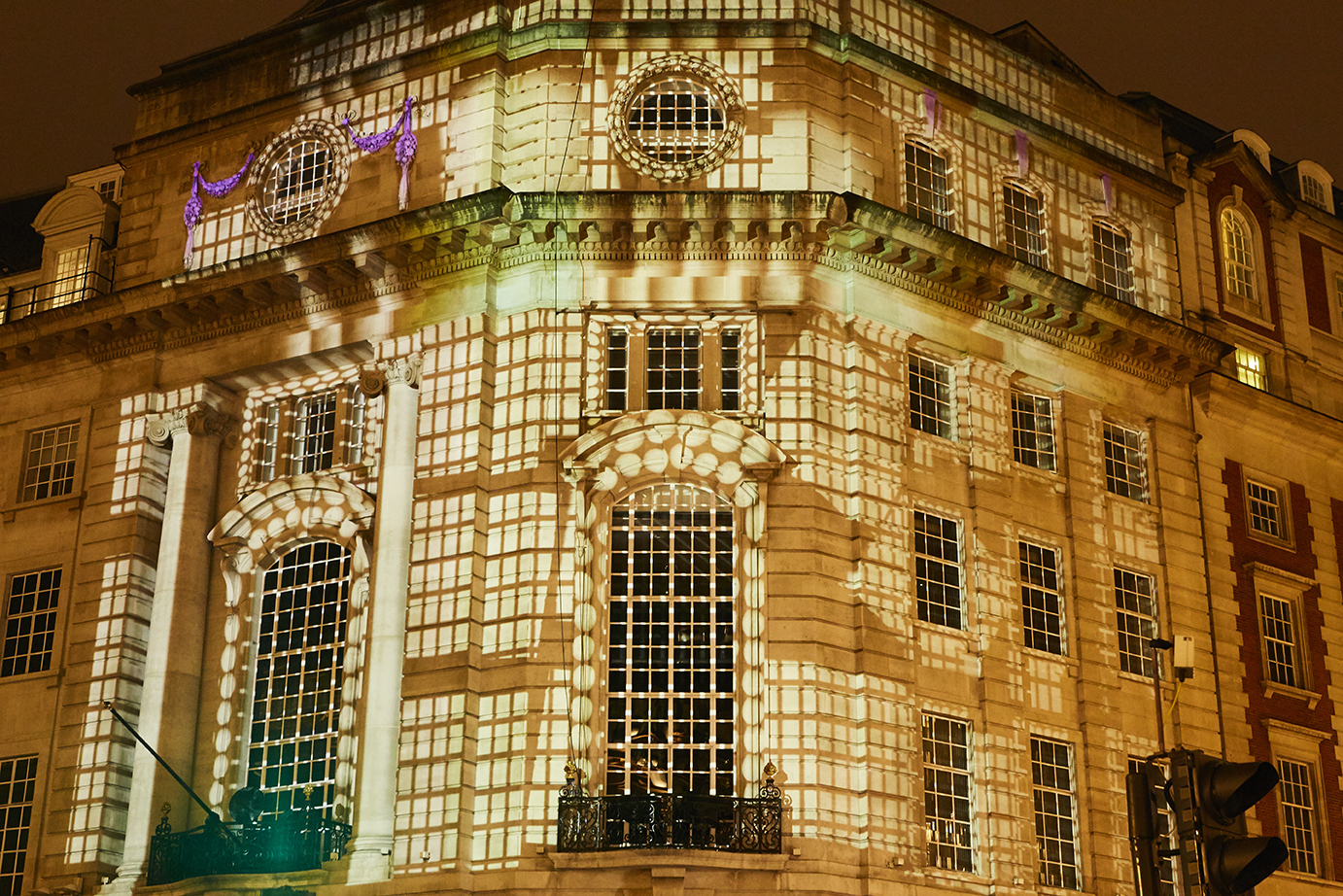
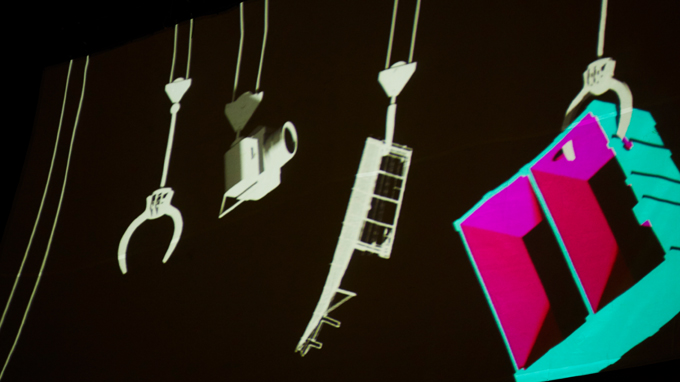
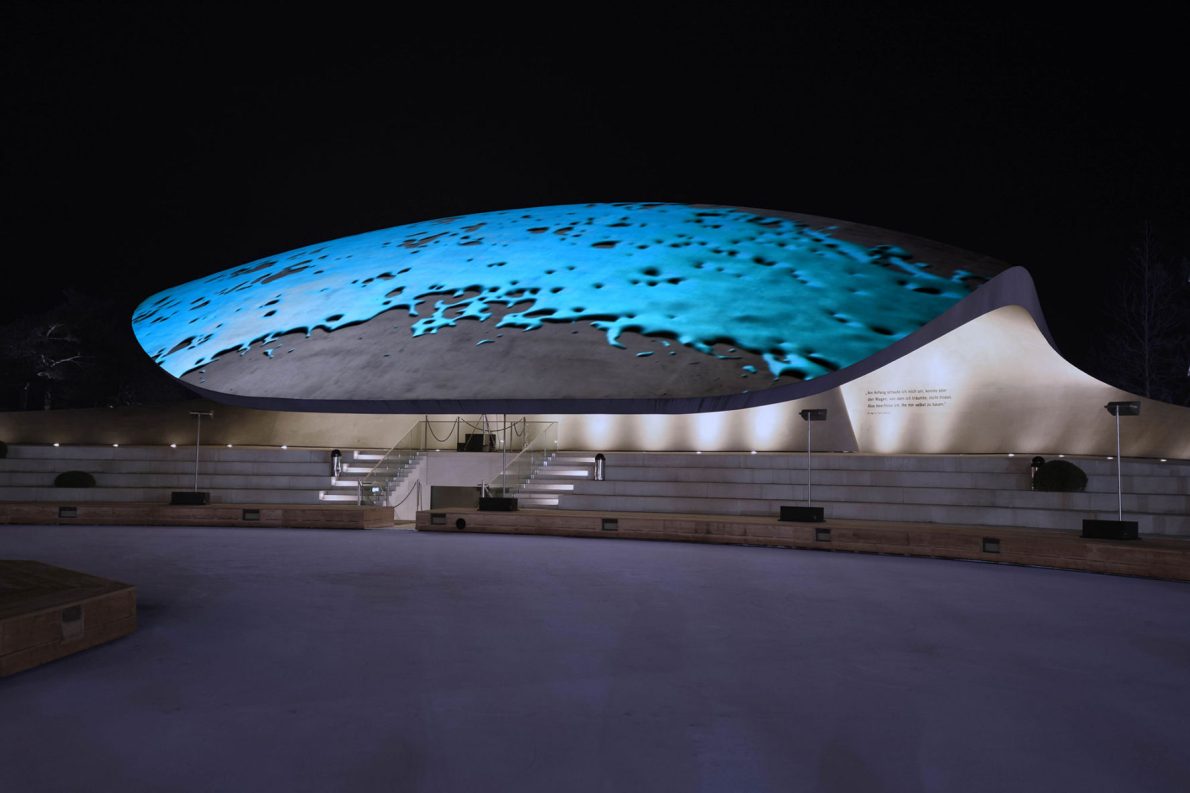
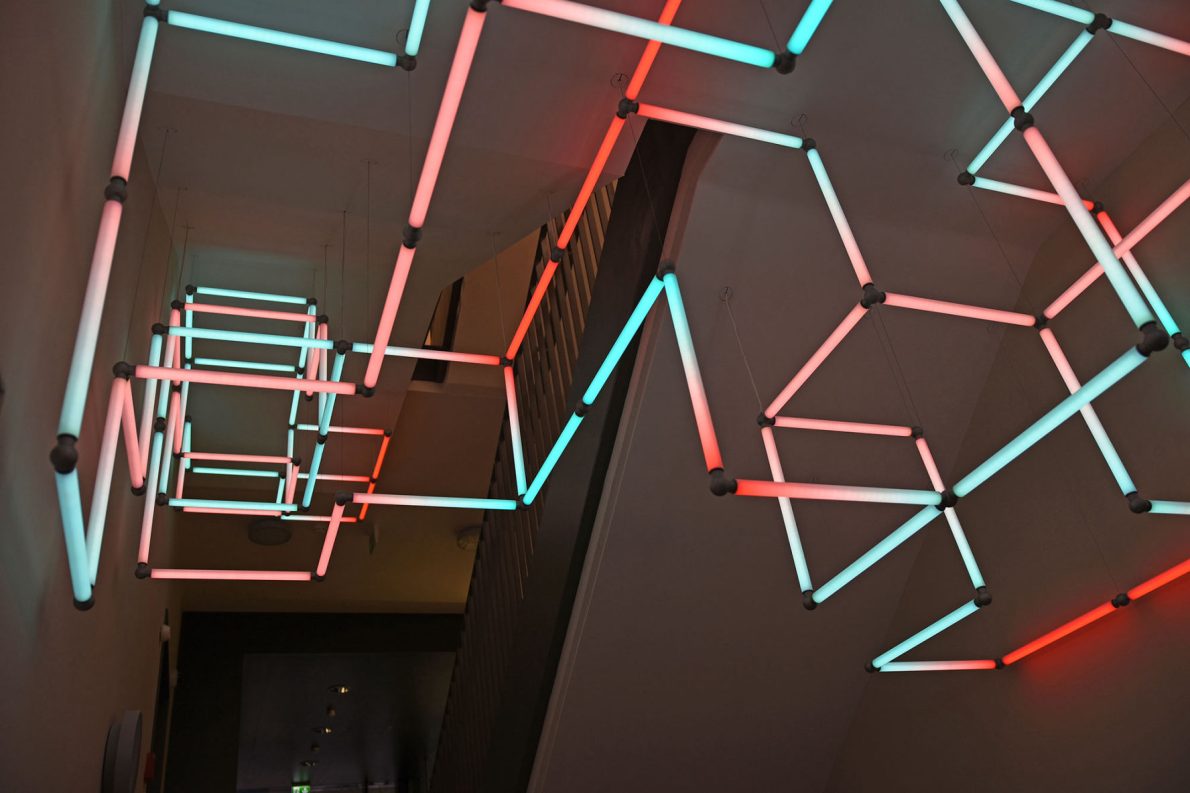
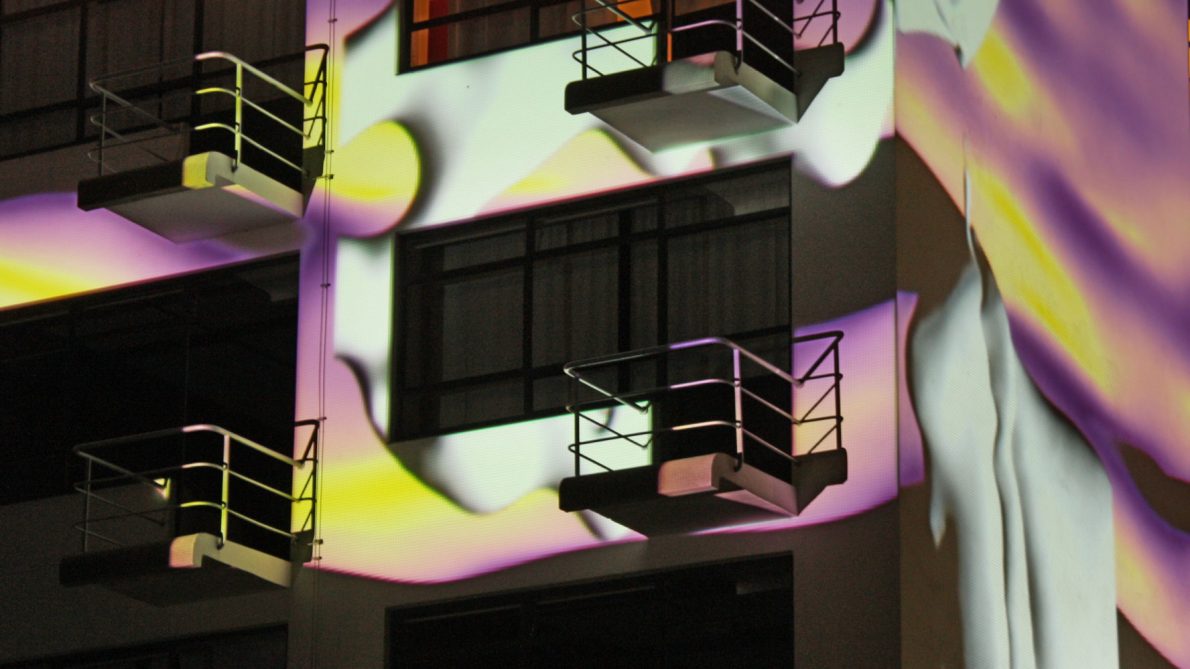
A projection is usually thought of as a separate illusion from its underlying surface; a film lit over a screen. Yet through Mader Wiermann’s use of using 3D animation, video-mapping and sound, the worlds of image and structure collide, blurring into each other. At night, when the silhouettes of city buildings blend into the sky, Mader Wiermann’s artworks temporarily transform solid, static structures into fluid, folding shapes.