

Three years have passed since we worked on HERD, and it remains one of the most unforgettable projects Artichoke has produced to date.
HERD was commissioned by Kirklees Year of Music 2023 (KYOM23), with a brief to reflect the historical transformation of Kirklees through the story of its varied musical cultures and traditions. The work united artists, hundreds of schoolchildren and community members, and hundreds more musicians from brass bands, choirs, and Boliyaan groups in a groundbreaking, genre-defying musical collaboration. Tying everything together were sheep, identified by Gough as the thread running through the evolution of the Kirklees region. Sheep were at the centre of the region’s economy, from rural idyll to industrial powerhouse based on the woollen trade, and drove the waves of migration that had a profound effect on the diverse musical cultures that emerged.
Over six extraordinary days in July 2023, 23 giant sheep sculptures appeared in surprising places across Kirklees, moving from the rural boundaries of Kirklees into the towns and city. Created as vehicles to broadcast original soundscapes across Kirklees, each sheep sculpture had its own unique identity, designed by Huddersfield-based artist Dave Young, working with heritage craft practitioners.
Artichoke aims to work with local contractors on all our projects, recognising that deep local knowledge is essential. It helps shape work that is rooted in place and responsive to its context, creates meaningful opportunities for local people, and connects more authentically with the communities who experience it.
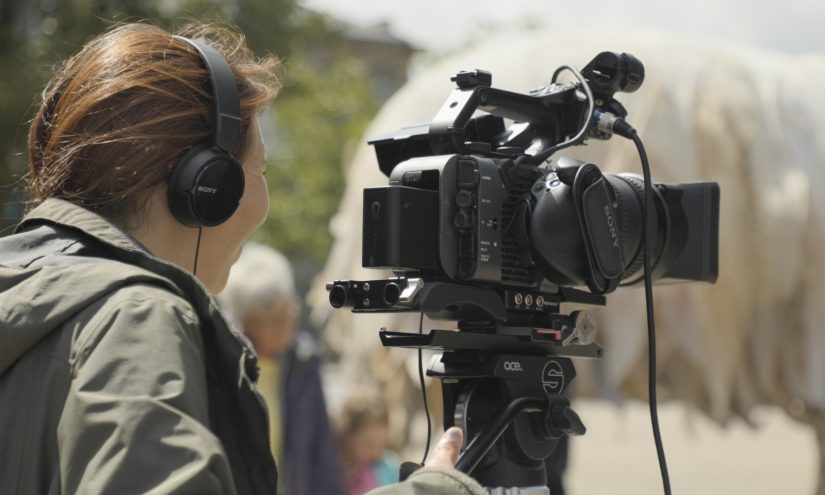
Paradigm Creative, based in Huddersfield, is an agency specialising in storytelling. Made up of filmmakers, designers, event planners and production specialists, its producers work with brands to deliver communications that make a lasting impression. Working with Paradigm felt like a natural fit, as they brought both an understanding of the broader programming HERD would sit within, as they were documenting several iterations of the wider KYOM23 campaign, and a strong grounding in the local context.
This was a project with many moving parts: an evolving soundscape, giant sheep sculptures, a connection to Kirklees’ rich textile and industrial heritage, and the diverse communities and musical traditions that shape the area today. Not to mention the strong placemaking ambition, with the sculptures travelling across Kirklees over the course of a week and transforming each location they visited.
One of the Communications Team’s biggest challenges was finding a clear and engaging way to communicate all of these layers to an audience unfamiliar with Artichoke’s work. As this was our first project in Kirklees, we needed to introduce the event in a way that felt accessible and compelling – something that would spark curiosity and encourage people to follow the journey as it unfolded.
We recently caught up with Ian Medley, Editor and Director of Photography at Paradigm Creative, and Lead Videographer for HERD, to reflect on the project’s documentation process.
Listen to the full conversation between Ian and Zoë here:
We realised early on that the communications campaign needed to be structured across several distinct strands, each helping audiences connect with a different aspect of the project. In order to retain the magic, the story unfolded in phases.
What’s your process when meeting with a brand to understand the project you’re capturing?
One of the first questions I ask is who the target audience is, closely followed by where the content will be seen.
A film for social media is very different to something designed for a live event, website or broadcast, so understanding the channels helps shape the creative approach from the outset.
The question that sits at the heart of every project, though, is: How do you want the audience to feel after watching this? If we can define the emotional response we’re aiming for, everything else tends to fall into place.
Personally, I’m always drawn to storytelling through people. Human stories are relatable, engaging and memorable. Whether it’s a participant, performer, volunteer or creator, finding those personal perspectives often provides the strongest route into a much bigger story.
It felt like HERD wasn't just showcasing Kirklees' history and communities - it was also celebrating the incredible creative talent that exists here today.
Ian knows Huddersfield and Kirklees inside out and, coincidentally, he knew many of the people we worked with on HERD. From advising on the best routes between locations, to the most impactful places to film the sheep sculptures, his local knowledge shaped every stage of the filming process.
What does Huddersfield / Kirklees mean to you personally, and how did that shape your approach to the project?
As a child, I was fascinated by local history. I spent hours in libraries trawling through microfiche archives and old history books, learning about the people, industries and stories that shaped the area. I was born just a stone’s throw from Tolson Museum, and I loved exploring its collections, particularly the exhibits focused on the textile industry and the region’s mill heritage.
That connection to local history definitely influenced how I approached HERD. The project celebrated stories, places and communities that already meant something to me personally. In fact, I even used the exhibition hall at Tolson Museum as a filming location for one of the HERD Kirklees films, which felt like a lovely full-circle moment.
Did this project make you see familiar places differently through the process of filming them?
Absolutely. There were a few locations, particularly around the Dewsbury area, that I hadn’t visited before, which was a real bonus of working on the project.
Many of the locations were already familiar to me, though, and that local knowledge proved incredibly useful when planning shoots and managing logistics. What HERD did was encourage me to look at these places through a different lens.
We intentionally took a drip-feed approach to information, ensuring we didn’t give too much away and risk spoiling the magic for audiences.
How do you get an audience excited while maintaining some mystery? Can you talk through the process of capturing the trailers?
The challenge with the trailers was creating intrigue without revealing too much. We wanted audiences to feel curious enough to follow the project and learn more, while still preserving the sense of discovery that would come with the live event.
One of the early concepts involved placing a ghosted HERD logo into various locations and pairing it with a modern, glitch-inspired soundtrack. As we developed the idea, it became clear that the approach felt a little disconnected from the themes and heritage that sat at the heart of the project.
Once we were given some of Orlando’s music, everything clicked into place quite quickly. The soundtrack immediately felt rooted in the world HERD was creating, and it helped us reshape the edits into something that felt more authentic and atmospheric.
One of my favourite little details happened during filming in a rural location. I noticed some sheep’s wool snagged on a barbed wire fence and collected it on a whim. That same piece of wool eventually found its way into Harold Wilson’s pocket for the final shot of the trailer. It’s a tiny detail that most viewers would never notice, but it felt symbolic of how the landscape itself became part of the storytelling.
The soundscapes created for HERD by Orlando Gough and a team of composers and musicians, and became the anchor for video content, guiding its rhythm and shaping both the visual style and emotional tone.
How did the audio help establish the tone of the video content?
The audio was hugely important in establishing the emotional tone of the films. The music acted almost as a guide through time, helping to connect different eras of Kirklees’ history and identity.
The folk-inspired elements rooted the story in the past, while local sound effects and atmospheric drones created a sense of anticipation and journey. As the soundtrack evolved, it gradually introduced more contemporary influences.
One of the things I particularly loved about this project was that I already knew some of the musicians involved through my own creative connections. Huddersfield might be a relatively small place, but it’s an incredibly collaborative creative community where artists from different genres and disciplines often cross paths and work together. Because of that, I already had an appreciation for the quality and diversity of the talent involved.
Were there moments where the soundscape changed how you approached the visual sequence?
Definitely. Having access to some of the music before filming influenced how we approached certain locations and shots.
Castle Hill is a great example – the Celtic-inspired soundtrack immediately made us think differently about how we framed the landscape. We leaned towards wide, sweeping vistas and slower camera movements that echoed the scale and rhythm of the music. We also used low-angle shots of the giant Celtic sheep, helping to emphasise its presence against the dramatic skyline.
This was a deeply human-centred project, with community at its core. Visiting the group’s rehearsals and immersing ourselves in their practice was a particularly meaningful part of the process.
Did filming the rehearsals change how you understood what the project was creatively?
Editing footage from the early rehearsals definitely gave me a better understanding of what the project was trying to achieve, but it still managed to hold onto a sense of mystery, which I really enjoyed.
As more rehearsals took place, particularly those at the stadium, the scale of the production became much clearer. Seeing the different creative elements come together gave me a greater appreciation of both the ambition of the project and the sheer number of people involved in making it happen.
It wasn’t until those later rehearsals that I fully understood the size of the story being told and the impact it would have when experienced live.
What role does trust play in capturing more authentic or naturalistic footage?
Trust is important, but for me the most important thing is helping people feel comfortable. Not everyone is used to being in front of a camera, and some participants naturally feel more confident than others when being interviewed or filmed.
A big part of my role is creating an environment where people can relax and simply be themselves. Often the most authentic moments happen once people stop thinking about the camera and start focusing on the conversation.
I’m naturally curious and always want to understand how things work, whether that’s speaking with performers, interviewing participants or spending time in creative spaces like the warehouse occupied by Dave and his team. That curiosity helps me ask better questions, understand the story more deeply and ultimately capture footage that feels genuine and honest.
I was proud to see so many local creatives contributing to a project of this scale, and it was a pleasure to work alongside them.