
London’s streets are an open-air gallery like no other. From ancient bronze sculptures to provocative Fourth Plinth commissions, the city wears its artistic soul in public. But how well do you really know it?
Whether you’re a seasoned Londoner or a curious visitor keen to look beyond the tourist trail, we’ve rounded up 6 quiz questions about London’s public art scene for you to test your knowledge, brush up on your art history, and prepare to see the capital in a new light.

Answer: Seven years
Artichoke’s very first project of a giant mechanical elephant and a 5.5-metre-tall girl roaming central London for four days in 2006 was seven years in the making.
Artichoke worked in secret, convincing public authorities to close streets normally reserved only for state occasions and sporting events.

Answer: 1100 AD
Popular as a landmark in the Middle Ages, The London Stone is a mysterious, irregular piece of limestone with unknown origins. Referenced in the writings of Shakespeare and William Blake, it is London’s oldest public monument.

Answer: Yinka Shonibare
Enclosed in a glass bottle and made from West African-inspired textiles, Yinka made history with his 1:30 scale replica of the HMS Victory back in 2010. The artwork now has a permanent home outside the National Maritime Museum.
Fun Fact: Yinka participated in the latest season of Artichoke’s public art project, The Gallery.

The 300-metre-long road tunnel is a spot where graffiti is not only legal but actively encouraged, making it a magnet for street art fans and artists alike.

Answer: True
Of the sculptures recorded across London, 73% were erected in the 20th and 21st centuries, with the former seeing the biggest increase.

Answer: False
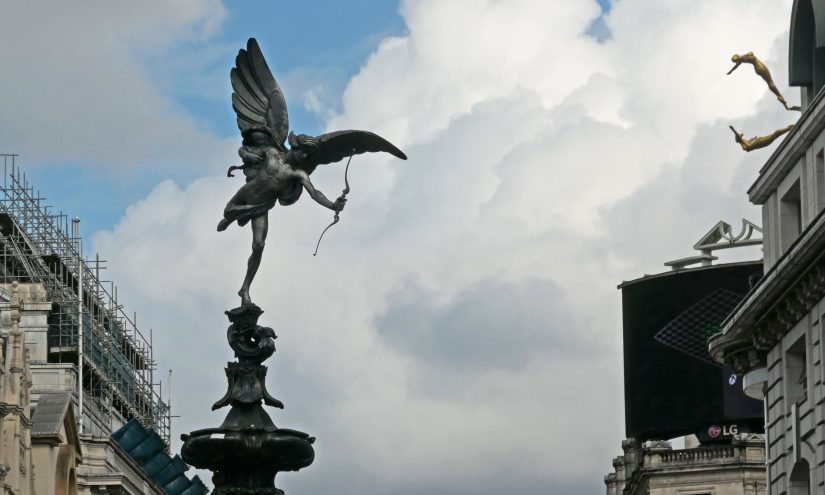
The first sculpture in the world to be cast of aluminium, this famous piece is actually of Eros’ brother, Anteros, avenger of unrequited love. An illustration of the sculpture also appears as the masthead for the Evening Standard.

Answer: True
Every hour for 100 days and nights in 2009, people from across the UK each took turns on Trafalgar Square’s Fourth Plinth as part of One & Other.
Performing anything they wanted, Antony Gormley’s commission drew global attention and inspired a storyline in BBC Radio 4’s The Archers – who coined the term “plinther” after the event.